
Size, Stitch Count, and the Big Stitch Field
A jacket back design is usually much larger than a chest design. A typical back design runs from about 8 to 12 inches wide, and from about 8 to 10 inches tall, depending on the jacket size and the design itself. A varsity jacket back may carry a large letter or a full team name across the shoulders. A corporate jacket back may carry a company logo with a tagline underneath. A team jacket may carry a large number, a mascot, or a full emblem. The exact size should be planned around the jacket, not around the artwork alone. A design that is right for an extra large jacket may be too big for a small jacket, and a design that fills the back of a small jacket may look lost on a large one.
Underlay and Pathing That Stop Puckering
Underlay is the foundation layer of stitches placed before the main design. On a small design, underlay is a quiet helper. On a large jacket back, it is the main defense against puckering and distortion. The underlay holds the fabric stable while the top stitches go down, and it gives the top stitches something firm to sit on. For a large back design, the underlay needs to be planned in sections, with each section supporting the part of the design that will be stitched over it. A single, light underlay across the whole back is rarely enough for a large design.
The type of underlay matters too. A zigzag underlay helps hold the fabric in place across a wide area. A tatami underlay, a grid of stitches, gives a firm base for large fill areas. An edge run follows the outline of a shape and helps keep the edges clean. A large back design often needs a combination, with different underlay types in different parts of the design. The digitizer chooses the combination based on the fabric, the size of each section, and the stitch direction of the top layer.
Splitting Designs for Multiple Hoopings
When a jacket back design is larger than one hoop, it is split into two or more parts, each stitched in a separate hooping. The split needs to be planned in the digitizing, with alignment marks that let the operator line up the second hooping with the first. A good split is placed where it will be least visible, often along a natural break in the design, such as between two words, along the edge of a shape, or in a plain area where a small overlap will not show. A bad split runs straight through the middle of a letter or a detailed part of the design, where any small misalignment will be obvious.
Alignment is the hard part of a split design. The operator needs a clear reference point to line up the next hooping, and the file needs to provide it. That may be a small registration mark stitched in the first hooping, a basting stitch that marks the edge of the next section, or a clear instruction in the order notes about where the split falls. The digitizer should also build a small overlap into the split, so the two parts meet cleanly even if the alignment is off by a fraction. An overlap that is too large will show as a doubled line. An overlap that is too small will leave a gap. Getting that overlap right takes judgment, and it depends on the fabric and the design.
Varsity, Team, and Corporate Jackets
Varsity jackets are one of the most common orders for jacket back digitizing. The classic varsity back is a large letter, a team name in an arch, or a full emblem with a mascot. The fabric is usually wool for the body and leather for the sleeves, and the back panel is a good, stable surface for a large design. A varsity design often uses a bold, simple shape that reads well from a distance, and the digitizing should keep that boldness. Fine detail in a varsity back design can get lost, because the design is meant to be seen from across a field or a hall, not from a few inches away. The arch of a team name needs care, because the letters sit on a curve, and each letter needs to be spaced and angled so the arch looks even when it is stitched.
Team jackets, including jackets for sports teams, clubs, and work crews, often carry a large back design with a name, a number, or a logo. The design may need to be repeated for many jackets, sometimes with a different name or number on each one. When a back design will be stitched many times, the file needs to be reliable above all else. It should stitch cleanly every time, without needing adjustments between jackets, and it should be built so the operator can hoop and stitch in a steady rhythm. If you are ordering for a team, tell us how many jackets you plan to stitch, and whether any part of the design, such as a name or number, will change from jacket to jacket.
Leather and Nylon Shells Versus Cotton Twill
Jacket fabric changes the digitizing more than most customers expect. Cotton twill is a stable, forgiving fabric for large designs. It holds stitches well, it does not shift much during stitching, and it suits a wide range of underlay and density settings. Many work jackets and casual jackets are made from cotton twill, and a large back design on twill is a straightforward job when the underlay and pathing are planned well.
Leather is a different matter. Leather does not heal. Every needle hole stays, so a mistake cannot be unstitched and restitched without leaving marks. A leather jacket back file has to be right the first time, and the digitizer should know it is for leather before the file is built. The density should be a little lighter than on twill, because too many needle holes close together can weaken the leather and cause it to tear along the stitch line. The underlay should be firm enough to support the design without adding unnecessary holes. And the design itself should avoid very fine detail, because fine detail means many holes in a small area. A bold design on leather looks better and lasts longer than a detailed one.
Centering, Placement, and Turnaround
Centering a jacket back design sounds simple, and it is easy to get wrong. The design should be centered on the back panel, not on the whole jacket, because the sleeves and the side seams can make the jacket look wider than the panel itself. The top of the design should sit a little below the collar, with enough room that the design does not crowd the neckline when the jacket is worn. The bottom of the design should sit above the hem, with enough room that it does not fold or crease when the wearer sits down. If the design is an arch, the arch should be centered on the panel, and the letters should be spaced evenly around the curve, not bunched on one side.
What we handle
Jacket Back Design Types We Digitize
From a two-colour varsity letter design to a 12-colour sports team logo for custom varsity jacket embroidery digitizing, we deliver files that run clean every time.
Varsity & Letterman
Arched school names, mascots, chenille-and-embroidery combinations for letterman jackets.
Sports Team Backs
Team crests, numbers and sponsor layouts sized for full jacket backs and warm-ups.
Corporate & Workwear
Large company logos on softshells, work jackets and uniforms that must match brand colours.
Mascots & Artwork
Tigers, eagles, skulls and custom illustrations with layered fills and shading.
Photo-Realistic Backs
Portraits and detailed art with colour blending across 60,000+ stitches.
Motorcycle Club Backs
Rockers, center patches and full-back club designs, sized to your template.
Our process
How Jacket Back Digitizing Works
- 1📤
Send Your Artwork
Upload your design with the quote form or email it — JPG, PNG, PDF, AI, EPS, CDR or SVG.
- 2💬
Receive Your Quote
Within 1 hour you get an exact flat-rate price. No payment upfront.
- 3🧵
We Digitize It
An expert hand-digitizes your design and sew-out tests it on a real machine.
- 4📥
Download Your Files
All formats by email in 6 hours or less. Edits are always free.
Pricing
Jacket Back Digitizing Pricing
Jacket back embroidery digitizing costs $35 flat rate, or $2 per 1,000 stitches. Standard turnaround: 6 hours. Rush turnaround: 2 to 3 hours. Quote reply: within 1 hour. First sample: free. Edits: free. Every file is hand-digitized and sew-out tested.
| Design type | Stitch count | Price |
|---|---|---|
| Simple 2-3 colour back design | 25,000–35,000 | $35–$45 |
| Standard multi-colour back | 35,000–50,000 | $45–$65 |
| Complex / detailed back design | 50,000–80,000 | $65–$90 |
| Photo-realistic / portrait backs | 60,000+ | $80–$120 |
| Rush delivery | Any | +$15 |
✓ Free edits included. All formats delivered. You own the file permanently. No setup fees.
Jacket Back Digitizing Samples From Our Portfolio
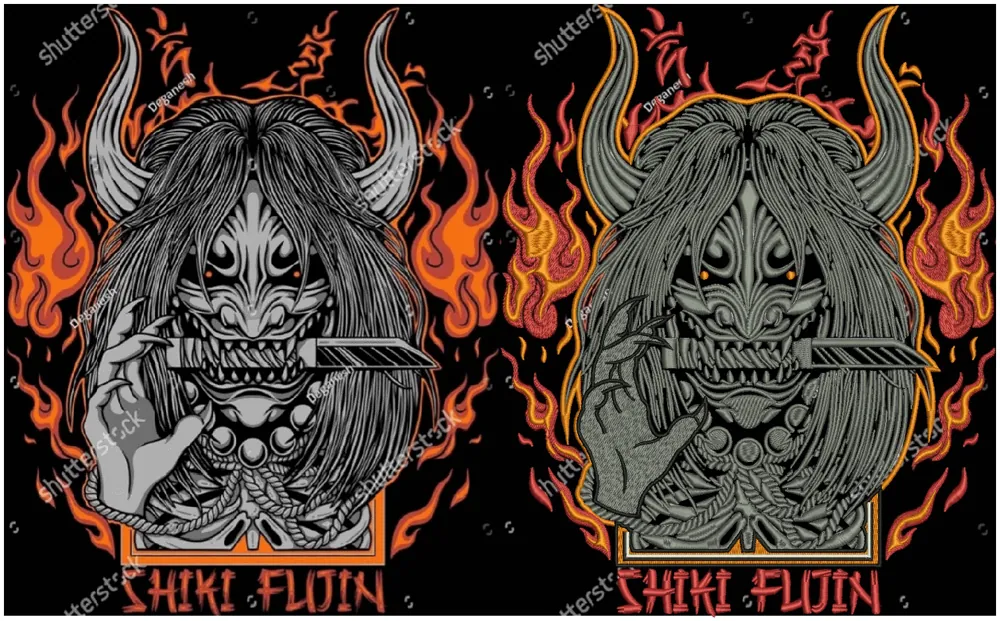
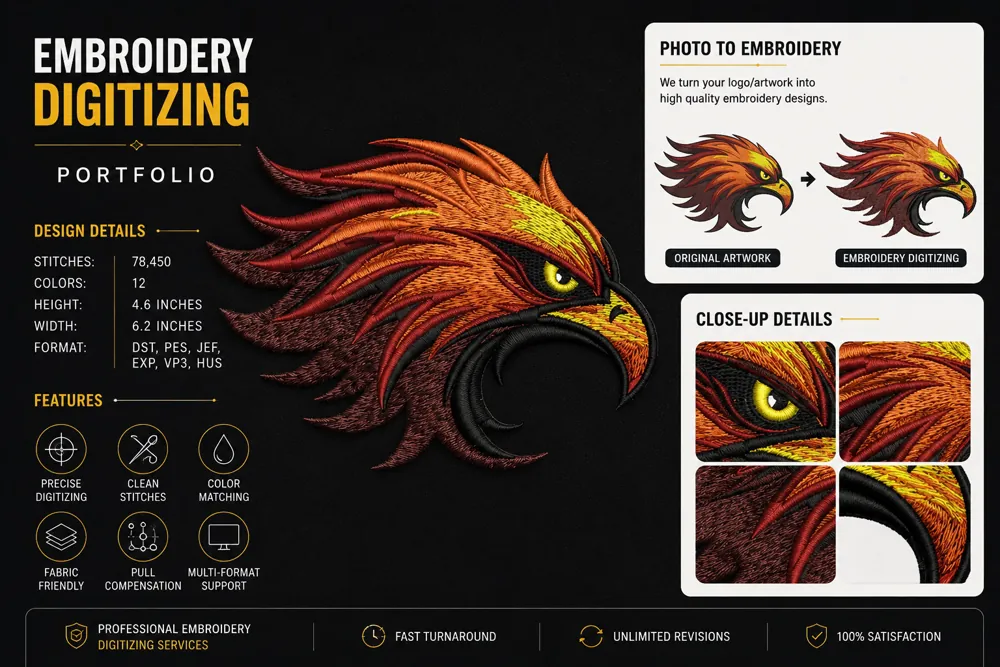
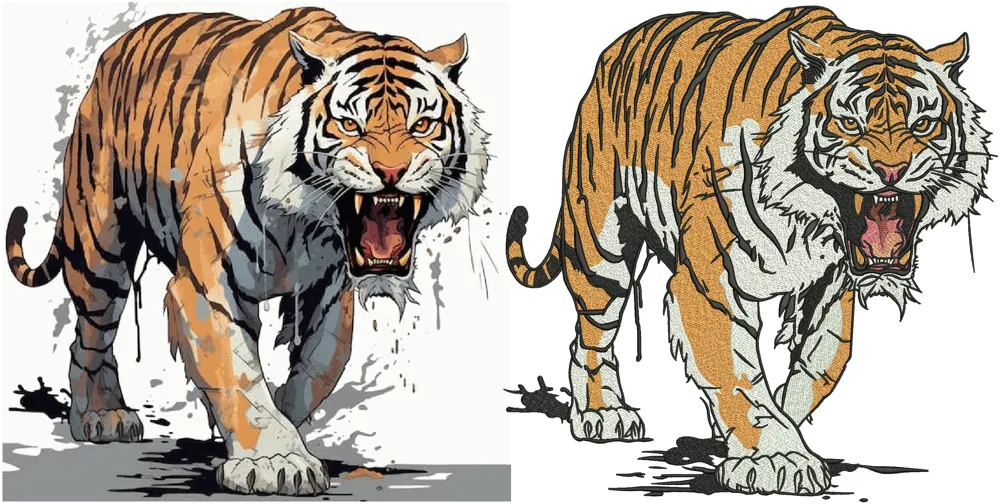
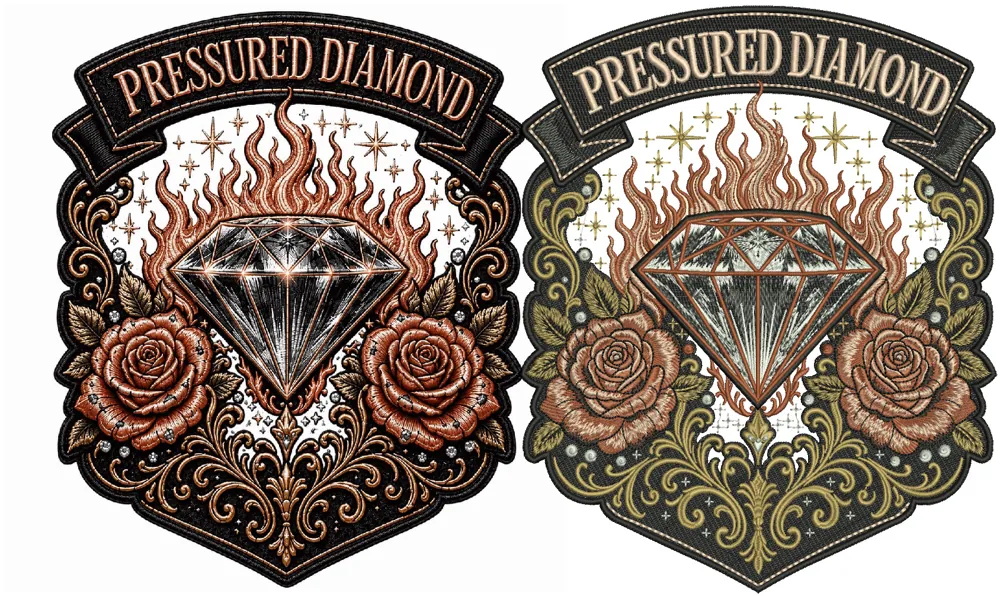
Combining a back with a front logo? Add left chest logo digitizing or chenille embroidery digitizing for big lettering. Compare every service on our pricing page or get a quote.
FAQs
Jacket Back Digitizing FAQs
How do I prevent puckering on large jacket back designs?
What is the maximum embroidery size for a jacket back?
Do you digitize split designs for multiple hoopings?
How long does a jacket back design take?
Can a left chest logo be enlarged for a jacket back?
What jacket fabrics do you digitize for?
Ready to Digitize Your Jacket Back?
Send your design — clean, flat, production-ready files in hours.